
The Society for Human Resource Management (SHRM) notes that candidate experience plays a meaningful role in attracting and retaining talent, and early interactions often shape how applicants view an organization. Those impressions begin long before a formal interview starts. A person walking into a building immediately notices light, layout, visual messaging, and the overall atmosphere around them.
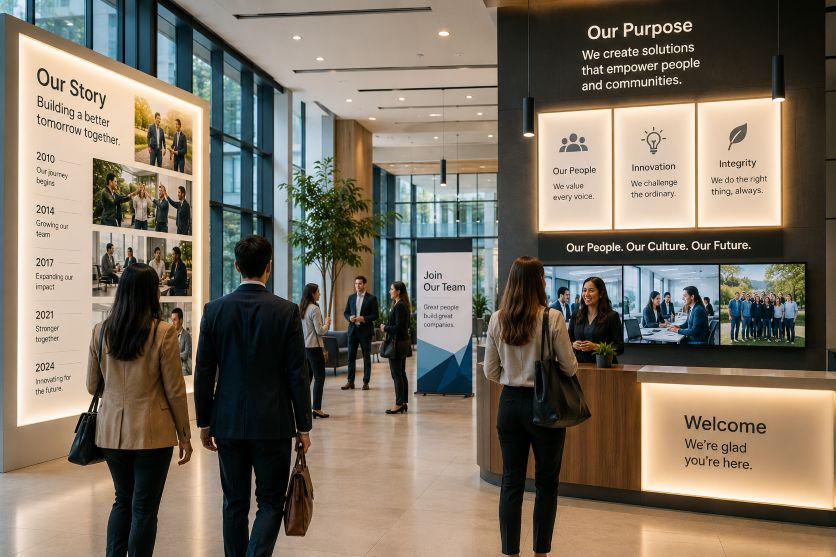
Recruitment environments have increasingly become part of how organizations communicate identity and culture. Visual displays in lobbies, waiting areas, and hiring events are often used to create a more engaging environment for visitors. Materials such as Duratrans, often used for illuminated displays and visual presentation systems, can appear in workplace spaces where companies present stories about values, employees, or organizational milestones.
Workplace Environments as Silent Communication Systems
A workplace does more than provide desks and meeting rooms. Every physical detail sends signals. Some messages are intentional, while others happen naturally. A clean and organized reception area may suggest attention to detail. Open spaces can communicate collaboration. Quiet work zones may indicate that focus and concentration matter within the organization.
People process environmental information quickly. Research from Harvard Business Review has discussed how workplace design influences employee experience and behavior. Environmental factors such as lighting, noise, and spatial organization affect how people feel and interact within a space.
Despite the importance of interview questions and qualifications, environments frequently shape emotional reactions before conversations even begin. Candidates entering an office often develop assumptions within minutes. They may wonder whether employees appear comfortable, whether the atmosphere feels welcoming, or whether the environment reflects what they were told during recruitment.
These reactions are often subtle. Few applicants openly say that a hallway, wall display, or reception area influenced their perception. Yet people naturally absorb visual information and connect it with expectations about workplace culture.
The Other Side of the Conversation
Physical appearance, however, does not always tell the full story. Attractive spaces can create assumptions that may not match everyday reality. Modern furniture, colorful meeting rooms, and polished visual branding can create a positive impression. Yet a visually impressive office does not automatically mean healthy leadership, employee satisfaction, or strong workplace relationships.
Gallup workplace studies regularly show that employee engagement depends heavily on factors such as communication, trust, recognition, and management quality. Environmental design can support these elements, but it cannot replace them.
Someone may enter an office and admire the design while employees themselves experience challenges that remain invisible to visitors. The opposite can also happen. A simple workplace with fewer visual elements may still have a supportive culture and strong employee relationships. These differences highlight an important point. Physical environments influence perception, but they do not independently define organizational culture.
Visual Storytelling During Recruitment
Even with those limitations, organizations continue using physical spaces to tell stories about who they are. Visual storytelling has become a common approach in recruitment and onboarding environments.
Many offices now display company history timelines, employee achievements, mission statements, community projects, and photographs of teams at work. These elements create a narrative that visitors can experience while moving through the space. Broader hiring patterns also show that candidate expectations continue evolving across industries. Discussions around shifting employment trends in service-based industries highlight how changing workforce demands increasingly influence how organizations present themselves to potential employees.
Large illuminated graphics, backlit presentation panels, and branded visual installations often support this process. Instead of simply hanging framed posters on walls, organizations sometimes build environments that communicate values in a more immersive way.
For example, a candidate arriving for an interview might see visual displays highlighting volunteer work, sustainability efforts, employee development programs, or workplace milestones. These details provide context beyond words spoken during an interview.
Visual communication systems also help organizations maintain consistency across different touchpoints. Career fairs, recruitment booths, reception areas, and onboarding spaces often use similar branding elements to create a recognizable identity.
The Candidate Journey Through Physical Space
Candidate perception rarely depends on a single moment. Instead, it develops through a series of experiences.
Arrival and Reception
The entrance creates the first visual impression. Lighting, organization, cleanliness, and directional signs all contribute to how people feel upon arrival.
A welcoming environment can reduce stress during interviews. On the other hand, crowded waiting areas or confusing layouts may create unnecessary tension.
Interview Spaces
Meeting rooms and interview settings affect comfort and interaction. Natural light, seating arrangements, and room design can shape the tone of conversations.
The World Green Building Council has highlighted how indoor environmental quality can influence well-being and productivity. Comfortable surroundings can help create more positive experiences for both employees and visitors.
Onboarding Experiences
Environmental impressions continue after hiring decisions are made. New employees spend their first days observing how spaces function and how people interact within them.
Visual messaging often becomes part of this adjustment process. Workplace graphics, illuminated communication displays, and branded storytelling elements can reinforce organizational values while helping people feel connected.
Authenticity Matters More Than Appearance
Organizations increasingly recognize that visual environments work best when they align with actual workplace experiences. A carefully designed office creates stronger impact when employees genuinely reflect the values displayed on walls and screens.
People tend to notice consistency. If teamwork appears throughout recruitment messaging and collaborative behavior is visible throughout the office, the experience feels believable. If visual messages and daily experiences conflict, candidates may sense a gap.
Workplaces therefore function as more than physical locations. They become environments where identity, communication, and culture intersect.
Backlit graphics, illuminated presentation materials, and workplace visual systems contribute to that experience. Yet their role is supportive rather than defining. Strong culture still depends on people, leadership, and meaningful interactions.
As organizations continue evolving hiring practices, physical environments will likely remain part of candidate experience. Spaces quietly shape perception. They influence emotions, create memories, and help people understand who a company claims to be. The strongest impressions, however, often emerge when workplace stories and real experiences match each other naturally.
Visual presentation tools, light-based displays, and environmental branding systems may capture attention at first glance. Lasting perception, however, develops through authenticity and human connection.