
Tag Archives: finding job candidates

Tag Archives: finding job candidates

How Cleaning Companies in Jeddah Support Business Growth and Employment?

The rise of professional cleaning companies in Jeddah (شركة تنظيف بجدة) reflects more than growing awareness about hygiene and sanitation. It also highlights the increasing importance of the cleaning industry within the broader business and employment landscape. From residential cleaning to large-scale water tank sanitation and commercial maintenance, cleaning services have become essential to the operation of modern urban life.

As businesses, institutions, and residential communities place greater emphasis on cleanliness, workplace safety, and public health, cleaning companies are evolving into structured service organizations that contribute significantly to economic growth and job creation.

The Expanding Demand for Professional Cleaning Services

In rapidly developing urban environments like Jeddah, sanitation services are now considered critical infrastructure. Offices, restaurants, hospitals, schools, hotels, and apartment complexes all depend on regular maintenance to meet operational and hygiene standards. This growing demand has expanded the role of cleaning companies beyond simple janitorial work. The truth is, there are plenty of cleaning companies that offer specialization in:

  • Water tank sanitation
  • Deep cleaning services
  • Commercial facility maintenance
  • Disinfection and sterilization
  • Industrial cleaning operations
  • Post-construction cleanup

As awareness of health and environmental safety increases, businesses are investing more heavily in professional sanitation to protect employees, customers, and residents.

The result is a rapidly growing service sector that supports both public health and commercial productivity.

Cleaning Companies are Creating New Jobs
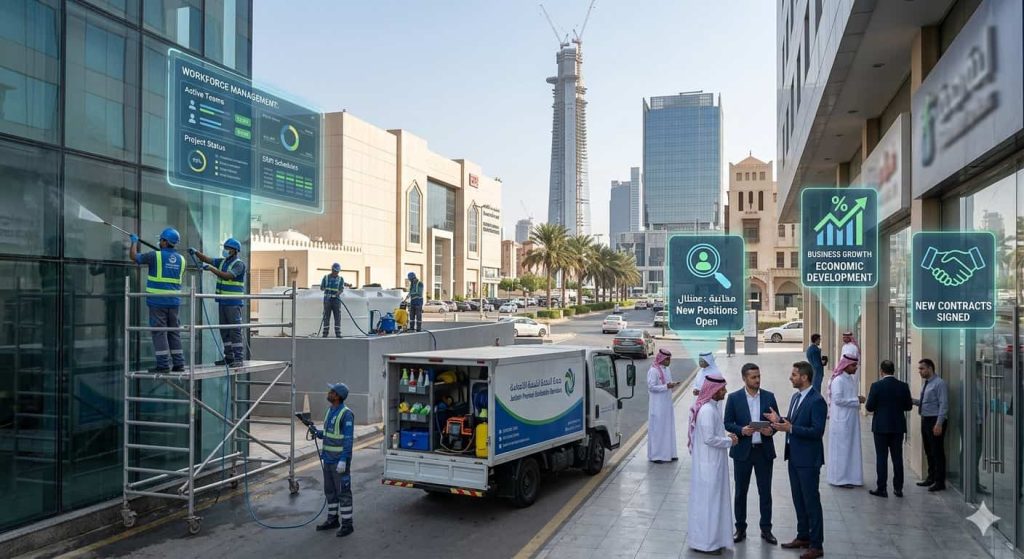
One of the most important economic contributions of the cleaning industry is employment generation. Professional cleaning companies create opportunities across multiple skill levels and operational areas. In these times, businesses operating in the cleaning industries are looking for skilled professionals such as:

  • Cleaning technicians
  • Water tank sanitation specialists
  • Drivers and logistics staff
  • Customer service representatives
  • Scheduling coordinators
  • Supervisors and inspectors
  • Sales and marketing personnel
  • Facility management professionals

This diversity of roles allows the industry to provide employment opportunities for both entry-level workers and experienced professionals.

As companies expand, the need for workforce training also increases. Employees often receive instruction in safety procedures, chemical handling, equipment operation, and sanitation standards. This professionalization helps elevate cleaning from informal labor into a structured career path within the service economy.

Technology is Modernizing the Cleaning Industry

Today’s cleaning companies in Jeddah are increasingly driven by technology and digital management systems. What was once a manually coordinated industry is now supported by advanced operational tools designed to improve efficiency and customer experience. In fact, if you would notice, more and more companies today are using digital booking platforms, workforce scheduling software, GPS-enabled logistics systems, customer relationship management (CRM) tools, mobile communication applications, automated invoicing systems and several tools to improve operational efficiency.

These technologies help businesses manage larger service areas, coordinate field teams more effectively, and respond to customer requests faster.

Digital transformation also creates additional employment opportunities in administration, technical support, software operations, and customer management, further expanding the industry’s economic impact.

Supporting Business Development across Industries

Professional cleaning companies also play a direct role in supporting other businesses. Clean and well-maintained environments improve customer perception, workplace productivity, and compliance with safety regulations. For example, restaurants rely on sanitation to maintain food safety standards, hotels depend on cleanliness to protect brand reputation, healthcare facilities require strict disinfection protocols, office buildings need hygienic environments for employee well-being.

Without reliable cleaning infrastructure, many businesses would struggle to maintain operational standards or meet regulatory requirements.

In this way, cleaning services function as a foundational support system for the wider economy. They help other industries operate more efficiently while contributing to healthier and more attractive urban environments.

The Future of Cleaning as an Economic Sector

As cities continue growing and hygiene expectations rise, the cleaning industry is expected to become even more important. Demand for specialized sanitation services, environmentally friendly cleaning methods, and technologically advanced facility management will likely continue expanding.

In Jeddah, this growth aligns with broader economic modernization efforts focused on service industries, workforce development, and urban infrastructure improvement. The future of cleaning companies may involve:

  • Smart sanitation systems
  • Eco-friendly disinfection methods
  • AI-assisted scheduling platforms
  • Real-time workforce tracking
  • Data-driven facility maintenance

These advancements could further professionalize the industry while creating new technical and managerial career opportunities.

A Clean Sweep for the Industry

The growth of cleaning companies in Jeddah represents far more than increased demand for sanitation. It reflects the emergence of a modern service industry that contributes to economic development, business operations, and employment creation.

By combining skilled labor, digital technology, and essential hygiene services, professional cleaning companies now play a critical role in supporting healthier communities and more efficient workplaces. As urban environments continue evolving, sanitation businesses are becoming not just service providers, but key contributors to sustainable economic growth in an increasingly service-driven economy.

Read More

Winter Storage Solutions for RV to Career Security in the Age of AI

Recreational vehicle owners in colder climates recognize the critical importance of proper seasonal storage planning. Winter storage solutions for RVs encompass various comprehensive protective measures designed to prevent freeze damage, moisture accumulation, structural deterioration, and mechanical issues. This way, even with extended periods of inactivity throughout the winter months, it makes them feel confident that nothing’s going to happen wrong in their RVs. 

The proactive, strategic approach required for effective RV preservation is synonymous to forward-thinking and adaptive strategies necessary for career protection and professional development. Artificial intelligence continues reshaping employment markets across numerous industries at an accelerating pace. Strategic career planning becomes essential for maintaining job security, professional relevance, and continued growth in this transformative technological environment that shows no signs of slowing down.

Developing AI-Complementary Skills and Human-Centric Capabilities

Professionals who adapt by developing skills that complement rather than compete with artificial intelligence technologies position themselves advantageously in the evolving job market landscape.

Critical thinking, creative problem-solving, emotional intelligence, and complex interpersonal communication remain uniquely human capabilities. Skills that AI systems cannot easily replicate or replace effectively. 

Workers who actively cultivate these abilities while staying informed about AI developments, limitations, and applications in their specific field create valuable combinations. Understanding how to leverage AI tools while providing human judgment, creates competitive advantages that are difficult for automated systems to duplicate or render obsolete.

Continuous Learning and Professional Adaptation Strategies

The rapid pace of technological advancement requires professionals to embrace lifelong learning as a fundamental career strategy and competitive necessity. Online courses, professional certifications, and advanced degree programs are important. Taking advantage of these resources provide structured opportunities to stay current with emerging trends, and best practices in rapidly changing fields. 

Many employers recognize that employee development directly contributes to organizational competitiveness and innovation in an AI-enhanced marketplace. Developing learning agility and maintaining curiosity about new developments becomes as important as specific technical skills that may become automated or obsolete over time.

Building Cross-Functional Expertise and Skill Diversification

Professionals who develop expertise spanning multiple disciplines, industries, or functional areas become more resilient to automation-related displacement and economic shifts. Combining technical skills with business acumen, communication abilities, creative talents, or industry-specific knowledge creates unique value propositions. No AI system has the ability of replicating this combination as of date. 

This diversification strategy provides multiple pathways for career advancement, reduces dependence on any single skill set, and creates opportunities to bridge different organizational functions or industries. Understanding how different business areas interact and influence each other becomes increasingly valuable in complex organizational environments.

Embracing Collaborative AI Relationships and Tool Integration

Rather than viewing artificial intelligence as an existential threat to employment, successful professionals learn to leverage AI tools. Integration of AI tools can serve as powerful collaborators that enhance productivity, analytical capabilities, and decision-making processes. Understanding how to effectively prompt, manage, interpret, and integrate AI outputs into professional workflows becomes a valuable meta-skill. 

Networking and Professional Relationships in the Digital Age

Human connections, trust-building, and relationship management remain irreplaceable elements in business environments. Building strong professional networks provides access to opportunities, and industry insights that AI systems cannot facilitate or replace effectively. Active participation in industry associations, professional conferences, and networking events creates valuable relationships that support professional growth, and business development that no AI systems can replace.

Read More

Business & Employment: How to Thrive in a Competitive Job Market

In today’s competitive job market, it is imperative for individuals to engage in continuous learning to succeed. Employers search for candidates who display adaptability, innovation, and a passion for ongoing learning and development. It is essential to continue acquiring new skills and knowledge to remain relevant and fulfill the requirements of an ever-changing workforce.

The Benefits of Networking for Business and Employment

Networking is vital for job seekers and business owners. By attending events, joining associations, and building connections, individuals can access valuable opportunities and insights.

Networking can result in job offers, collaborations, and partnerships that are beneficial for personal and professional growth.

The Role of Entrepreneurship in Business and Employment

Continuous learning is crucial in competitive job markets like dentistry, where digital marketing tools like Google Ads for dentists can boost patient acquisition and practice growth. Adaptable, innovative, and continuously learning employees are highly sought after by businesses. Success in business and employment also involves networking, entrepreneurship, and work-life balance. Staying informed about future trends, such as the growing importance of online advertising platform is essential for long-term success.

Balancing Work and Life: Tips for a Healthy and Productive Lifestyle

Achieving a healthy work-life balance is critical for individuals looking to excel in business and employment. It’s crucial to prioritize self-care, establish limits, and implement stress management techniques. By prioritizing our mental and physical health, we can be more efficient and productive in our work, while also enjoying a satisfying personal life.

The Future of Business and Employment: Trends and Predictions

In today’s rapidly changing job market, it is essential to stay up-to-date with future trends and predictions. As technological advancements, globalization, and the need for sustainability continue to shape the business landscape, individuals who are adaptable and innovative will have a greater chance of success. It’s critical to stay informed about these changes to remain competitive in the evolving job market.

Staying relevant in today’s business and employment world demands continuous learning, entrepreneurship, networking, and work-life balance. To thrive in the ever-changing job market, individuals must be able to adapt, innovate and have a good grasp of current trends. These efforts can lead to personal and professional growth and contribute to a successful and sustainable business environment.

Read More

Speed Up Your Job Search: Effective Tips to Find a Job Faster

Are you tired of sending out countless job applications and hearing nothing back? Looking for an effective way to speed up your job search? You’re in the right place. The job search can be a long and tedious process, but there are a few steps you can take to help you find a job faster. From optimizing your resume to networking, you can make the most of your job search and increase your chances of success.

Utilize Job Search Websites

Job search websites are the most effective way to speed up your job search. These job boards carry tons of job posts from different industries. The best part, using their website is mostly free. You can find a number of job search websites, but the most popular ones include LinkedIn, Indeed, and Monster. These sites allow you to create a profile and upload your resume, which will be available to thousands of employers.

In addition to that, you can also use these sites to network with potential employers and other job seekers. You can post questions on forums, join groups that are relevant to your industry, and send and receive messages with other users.

This way, employers searching for job seekers while using 구글 seo 작업 can see your post and may cast you.

Preparing for Job Interviews

Before you go to an interview, you should thoroughly prepare and practice your interview skills. It’s important to go into every interview feeling confident and prepared so that you can make a good first impression. Your interview skills are just as important as your resume, and they can make the difference between getting the job or not.

Following up with Employers

Many job seekers make the mistake of waiting for an employer to follow up with them after an interview. Employers are busy people, so it’s unlikely that they’ll follow up with you.

You need to be proactive and follow up with employers after an interview. You can do this in person or over the phone, or you can send a quick email.

Read More

7 Tips for Attracting Ideal Job Applicants

The ideal candidate cannot simply be convinced. Fortunately, there is more and more science available about how you can do that. Like these 7 tips, which have proven to attract more people.

Job Interview


When you write a vacancy text, you soon think that the ideal candidate can’t wait to take in every word with love. But the reality is unfortunately different for most texts. In fact, if you’re lucky, a candidate will pick up your text and scan it quickly. All those beautiful, important details that you have hidden in your text? They are – and remain – often hidden gems.

The better your vacancy text, the greater the chance that the ideal candidate will see it and respond

The better your vacancy text, the greater the chance that the ideal candidate will still see it and respond to it. But what is a good vacancy text? Fortunately, nowadays there is a lot of research that can help with that. For example, LinkedIn recently investigated which vacancies respond best. For this, it not only analyzed millions of (incidentally only English-language) vacancies on the platform itself, it also asked about 450 candidates on the basis of a few (fake) vacancies that they (say they) pay attention to.

Aside from getting your business found by applicants via a Spydialer phone lookup, here are 7 tips to help you find the perfect candidate.

#1. Keep it short

A vacancy text with a maximum of 150 words results in 17.8 percent more applications than a text with 450 to 600 words. Keeping your text concise ensures that candidates can quickly find what they are looking for. And since more than 50 percent of vacancies are now viewed on mobile, short vacancies also fit better with the modern job seeker, says LinkedIn.

#2. Not too informal, please

A not-too-serious or heavy tone is welcome. But be careful with jokes and an informal approach, as the data shows. Candidates who were shown an extremely informal vacancy text were 4 times more likely to indicate that the employer did not suit them, and was 2 to 4 times less likely to apply.

For this research, three texts were composed: an ‘ordinary’, a formal one, full of business jargon, and finally an informal one, with a few jokes and texts such as ‘kick-ass corporate manager’ and weird hashtags such as “#spreadsheets4life”. Remarkably, the latter category of texts scored the least on all parts. The lesson, according to LinkedIn: it’s good to show a human face and show your culture. But don’t overdo it – if your intention is to attract candidates.

#3. Let candidates know what you have to offer them

This conclusion may not be surprising, but it is often overlooked. But candidates do not (immediately) look at what you expect from them in a vacancy. They first look at the opposite: what you have to offer them. The salary plays a prominent role in this, but also more everyday things, such as: what they can expect from an average working day. And, also important: whether they have a real chance of getting the job.

Candidates decide in no more than a few seconds whether they will continue reading a vacancy text. So make sure that the information they are looking for can be found quickly. Candidates want to know if it is worthwhile to invest time in your vacancy. Once you’ve made that clear to them, they’ll want to know more about the role you have to offer.


ALSO READ: 3 Employee Engagement Lessons You Can Learn From Taylor Swift’s ‘Folklore’


#4. Don’t make your company the core of your vacancy

Things like your organizational culture or your mission? Candidates rarely indicate that they find that helpful information. Not that they don’t care what your business looks like, or what you do. They just don’t find the most interesting information in a vacancy text. If they are looking for such information, they do so elsewhere, not so quickly in the vacancy. So do not spend too much space in your vacancy on that, according to the authors of the study, but rather make it clear on your website what kind of culture applicants can expect. Then you can focus on the job in question in the vacancy.

#5. Define what success looks like

Something candidates find particularly useful: how your organization determines whether someone will be successful in this role. And if all goes well, you have of course already thought about that before you draw up the vacancy. How do you want to look back after 1, 2, or 5 years? Where do you stand then?

Something candidates find particularly useful: how to determine if someone is going to be successful in this role

Candidates want to know such results as specifically as possible so that they can estimate for themselves whether they will achieve those goals – and therefore whether they have a chance of getting the job. It’s an easy way to quickly improve your vacancy texts. And it makes your text stand out even more too. Therefore, talk to stakeholders in order to formulate realistic, concrete, and quantifiable performance for the position.

#6. Post your vacancy on Monday

We’ve known it for a long time, but Monday is still the day of the week when job seekers go on the hunt for another job. Tuesday and Wednesday also score well, but Thursday and especially Friday are already a lot less. Not to mention the weekend. So don’t expect a flood of applications when you put a vacancy live on Friday.

#7. Use gender-neutral words

Men generally apply more than women, and 13% more. A study in the American Psychological Association’s Journal of Personality and Social Psychology found that this is partly due to the vacancies themselves: some contain so many ‘masculine’ words that women no longer feel addressed. Even if they are qualified for this. So avoid terms such as ‘strong’, ‘assertive’, or ‘ninja’ in your text, the researchers advise.

Read More

  • 𐌢